Narhar, Jhunjhunu District, Rajasthan
Narhar
A Comprehensive Phenomenological Investigation into the Bandhej Saree Artisans
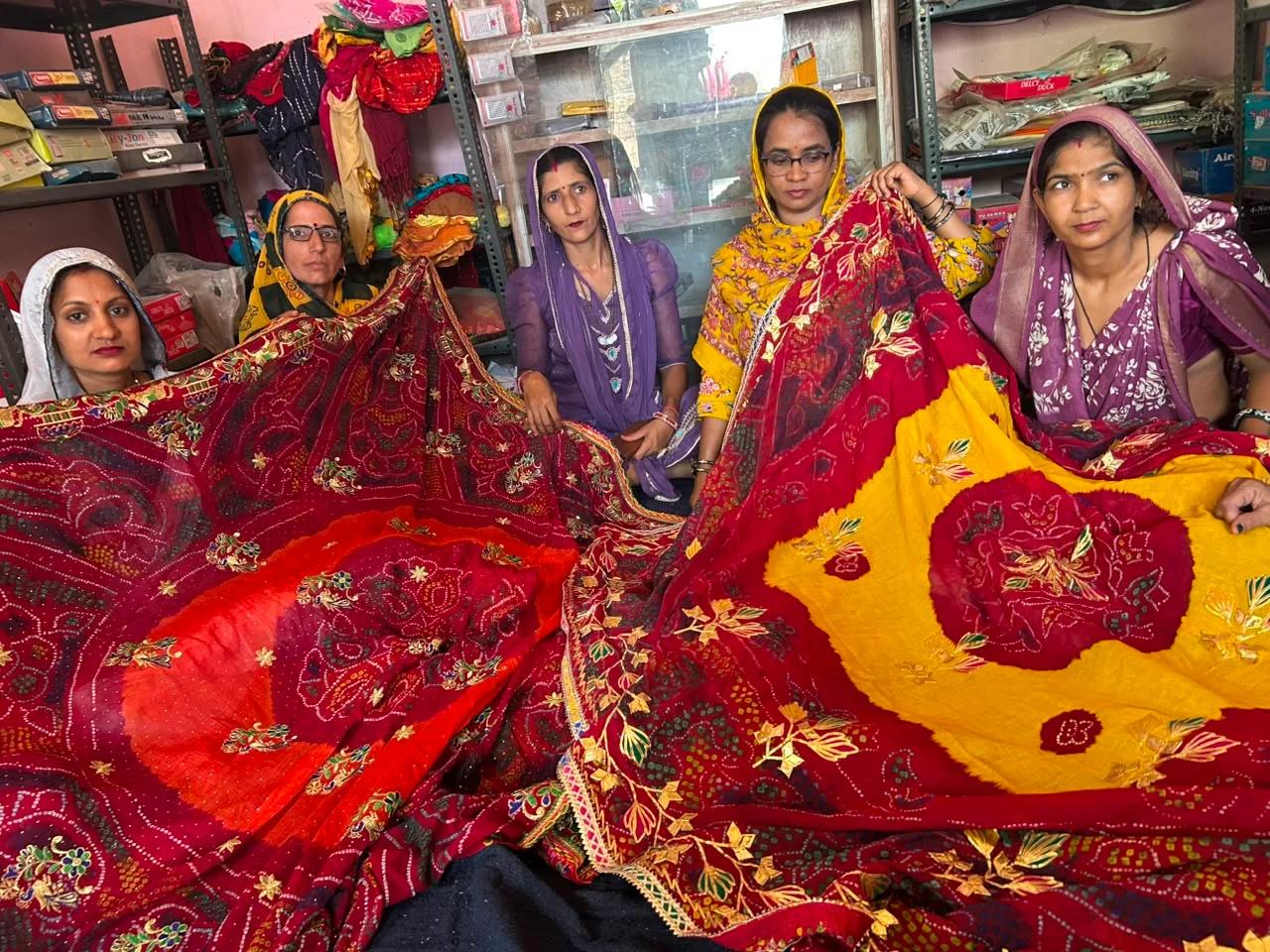
A study of the Bandhej resist-dye saree tradition in Narhar, organised through the Ambuja Agency Self-Help Group Cooperative.
The Labour and Gender Architecture of Production
Production proceeds through three coexisting organisational modalities: the household-based production unit, wherein a practitioner undertakes binding and dyeing within domestic space; the cooperative's shared workspace, furnishing collective infrastructure exterior to the home; and, of more recent and still minority vintage, a nascent tier of individual entrepreneurial operations undertaken by younger, comparatively educated practitioners.
The Bandhej Technique
The Bandhej technique reposes upon the systematic gathering and compression of cloth prior to dye submersion, an operation of deceptive simplicity that conceals an accumulated body of knowledge distinguishing the seasoned practitioner from the novice.
Biographical Testimony: The Voices of the Artisans
Savitri, aged forty-seven: “The money I make, this money is mine. My husband does not question how I use it. I have purchased a goat from my earnings; I have sent money toward my daughter's schooling...”
Geeta, aged thirty-four: “When Ambuja Agency came to recruit me, they explained that we could collectively command better prices, that we would access markets beyond the village merchant. This appealed to me greatly.”
Anita, aged fifty-two: “When I began earning money through my own labour, I regained dignity. My sons now consult me on decisions that affect me. This is not because they have become enlightened; it is because I have become economically relevant.”
Findings
The article identifies global appreciation alongside local marginalisation, the value of cooperative organisation, the agency created by independent income, occupational health concerns, and declining transmission of skills between generations.
Opportunities
Potential next steps include more equitable market structures, democratic cooperative governance, occupational health provision, deliberate intergenerational teaching, and a more diverse product portfolio.